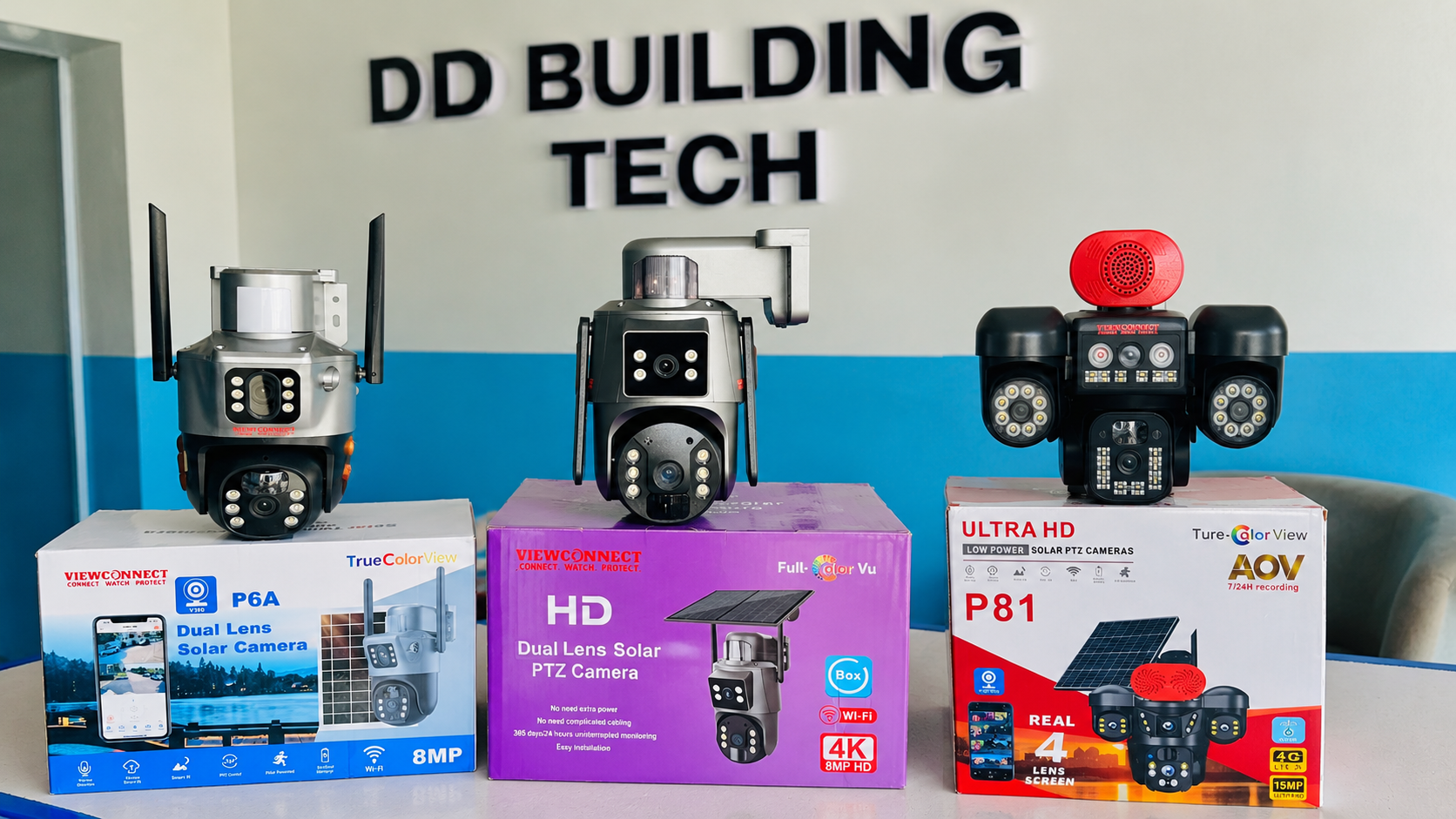
Have you ever wondered why two homes can have CCTV cameras, yet one feels far more secure than the other?
After 5 years of installing CCTV systems for homes and properties, not only in Enugu and Awka but across different parts of Nigeria, we’ve noticed something that many homeowners only discover after making the wrong choice.
Over the years, we’ve seen which CCTV systems perform well, which features actually matter, and which seemingly small details can make a big difference in how well your home is protected.
And that experience has helped us identify a few simple guidelines every homeowner should know before choosing a CCTV camera for their home in Nigeria.
By the end of this article, you’ll have a much clearer idea of which CCTV system is truly the best fit for your home in Nigeria, helping you choose with confidence, avoid costly mistakes, and have peace of mind knowing you made the right choice.
What Makes a CCTV Camera Good for Home Security?
A good CCTV camera is not simply one with the highest resolution or the most features.
It should solve the security problems around your particular home.
A good home CCTV system should give you:
- Clear footage during the day and at night
- The right coverage for important areas
- Reliable performance outdoors where necessary
- Suitable storage for recorded footage
- Remote viewing if you need to monitor your home from your phone
- A dependable power and connectivity solution
Most importantly, the camera should be suitable for where and how you intend to use it.
Why Not Every CCTV Camera Is Built for Nigerian Homes
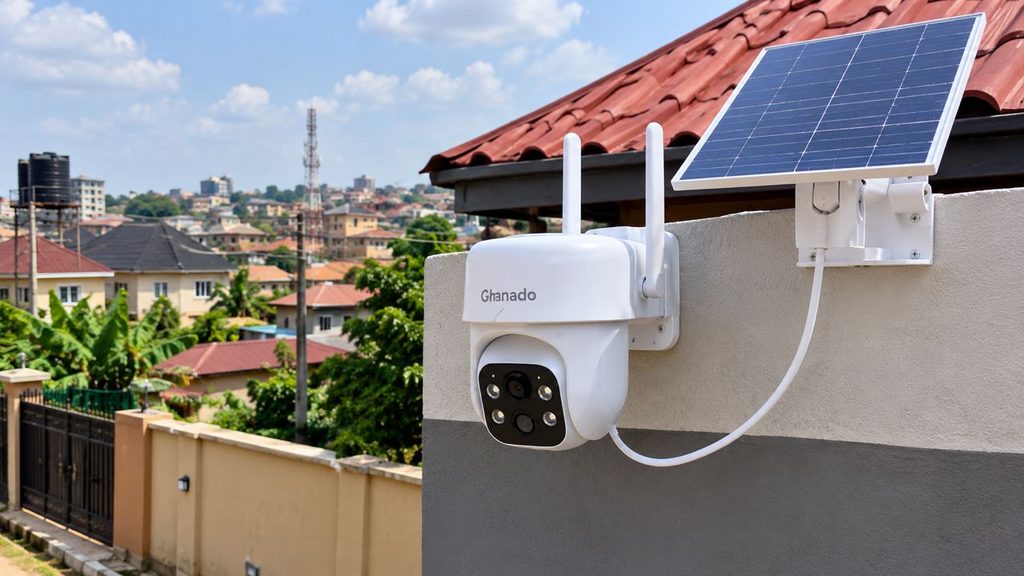
A CCTV camera can give you a clearer view of what is happening around your home, but simply having one installed does not automatically mean your property is properly protected.
In Nigeria, the environment your CCTV system has to operate in matters just as much as the camera itself.
From intense heat and heavy rainfall to dust, humidity, unstable power supply and the need for reliable surveillance at night, your home presents conditions that can affect how well a CCTV system performs over time.
And then there is the security side.
Depending on where you live, your surveillance system may need to do more than simply record activity.
It may need to provide clear footage at night, cover vulnerable areas of the property, withstand outdoor conditions and remain dependable when you need it most.
This is why choosing a CCTV system should start with your property, not just the camera’s specifications.
What to Consider Before Choosing a Home CCTV System
Before choosing a CCTV camera for your home, consider these important factors.
Coverage
Start with what you need to see.
Think about your:
- Main gate
- Entrances and exits
- Driveway
- Perimeter walls
- Car park
- Backyard
- Living areas
- Other vulnerable points
The number of cameras you need should depend on the areas that require coverage.
Night Vision
Security doesn’t stop when it gets dark.
Check how well the camera performs at night and whether it provides the level of visibility you need.
Some cameras use infrared night vision, while others offer colour night vision or additional lighting.
The right choice depends on the area you’re monitoring and the level of detail you need.
Storage
Your camera needs somewhere to keep the footage it records.
Depending on the system, storage may include:
- DVR/NVR
- Memory card
- Cloud storage
Consider how long you want your recordings kept and how much footage your system will generate.
Remote Monitoring
Want to check your home while you’re at work, travelling or even outside Nigeria?
Then you’ll need a system that supports remote monitoring.
With the right setup, you can view your cameras through a mobile app and check what is happening around your property from your phone.
Power Supply
This is particularly important in Nigeria.
A CCTV system is only useful when it can remain operational when you need it.
Consider whether your cameras will use:
- Mains electricity
- Backup power
- Battery
- Solar power
For homes affected by frequent power interruptions, a suitable backup or solar solution can help keep surveillance running.
Weather Resistance
Outdoor cameras have to deal with more than security threats.
They may be exposed to:
- Rain
- Dust
- Heat
- Humidity
- Direct sunlight
If you’re installing cameras outside, make sure the model is designed for outdoor conditions and properly installed.
Best Types of CCTV Cameras for Nigerian Homes
There isn’t one type of CCTV camera that is automatically the best for every home.
Different cameras solve different problems.
Here are some options worth considering.
PTZ Cameras
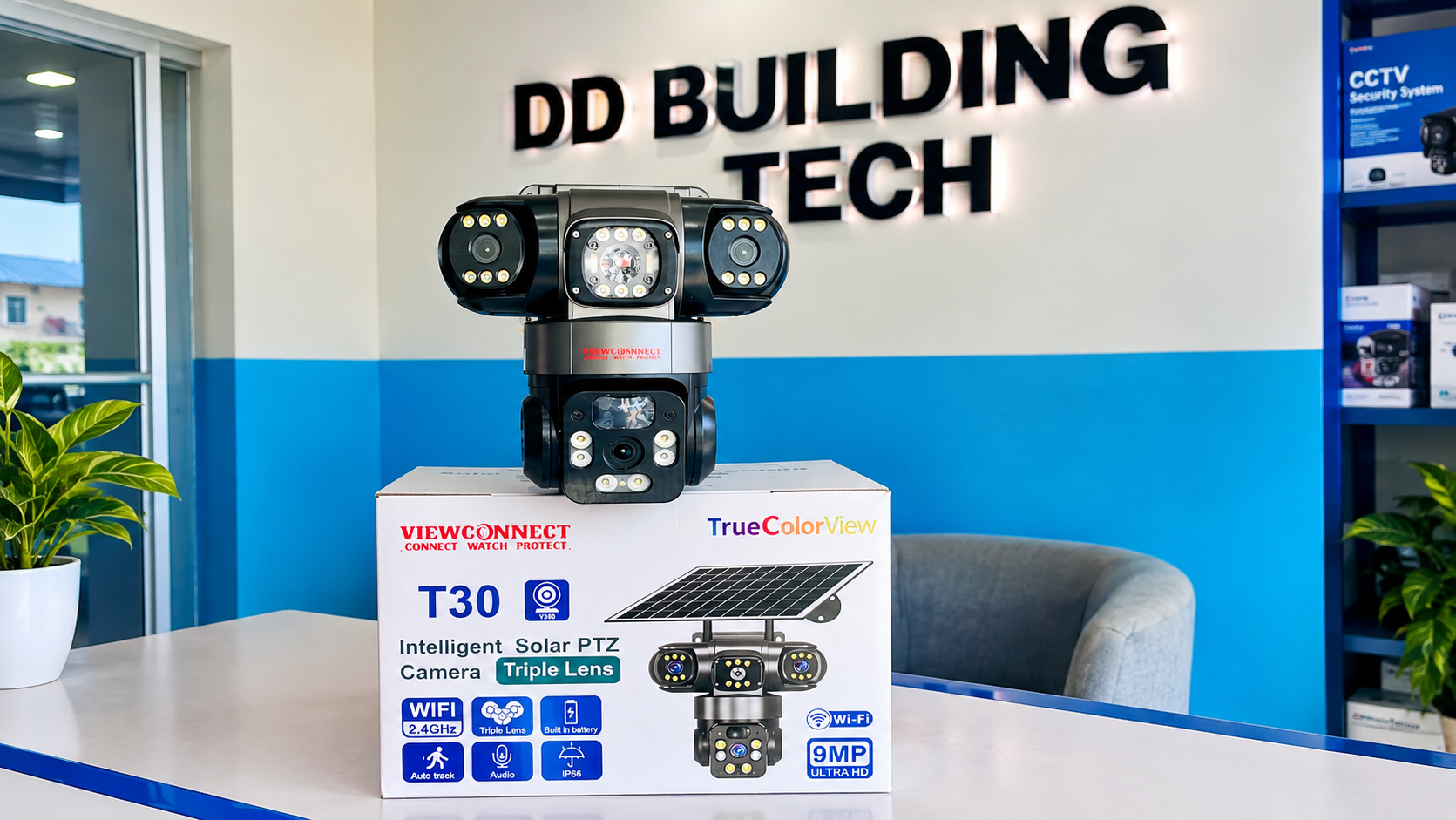
PTZ means Pan, Tilt and Zoom.
These cameras can move from side to side, up and down, and zoom into specific areas.
They can be particularly useful when you need to monitor a large area.
Best for:
- Large compounds
- Estates
- Large driveways
- Wide outdoor areas
Why consider it:
- Covers a wide area
- Can remotely move and zoom
- Useful for monitoring large properties
Keep in mind:
For larger properties, PTZ cameras can therefore work best as part of a properly planned system.
Solar CCTV Cameras
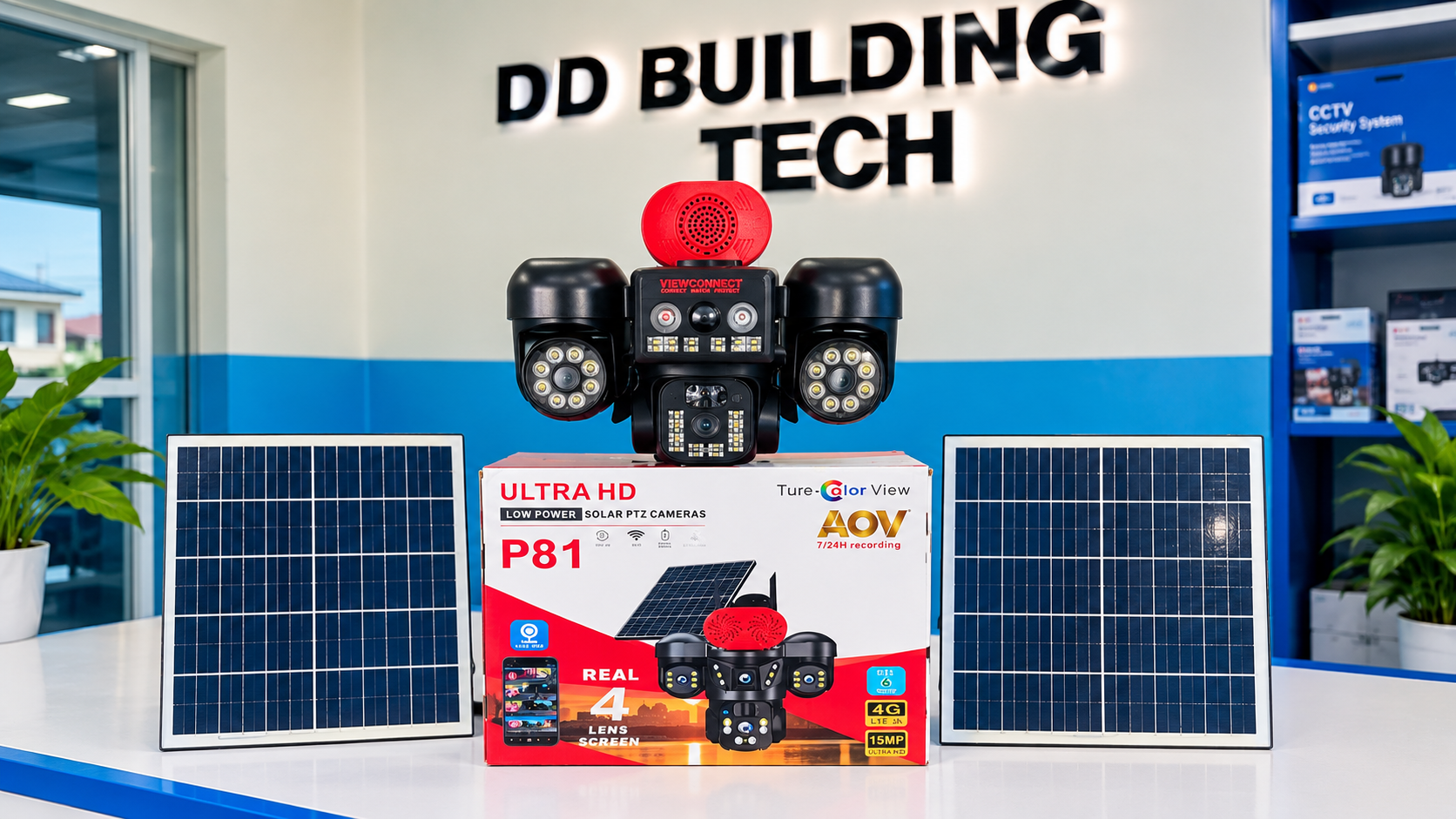
Solar-powered cameras use a solar panel to charge a built-in battery, reducing dependence on regular electricity.
For Nigerian homes, this can be particularly useful where power supply is unreliable or running cables to a location is difficult.
Best for:
- Homes with unreliable electricity
- Large compounds
- Remote properties
- Areas where running power cables is difficult
Why consider it:
- Uses solar energy
- Reduces dependence on grid electricity
- Can operate in areas without convenient power access
- Can support remote monitoring depending on the model
Keep in mind:
The position of the solar panel, sunlight exposure and battery capacity can all affect performance.
The camera still needs proper installation.
For professional CCTV installation and setup, you can contact DD Building Technology Solutions.
4G/5G Cameras
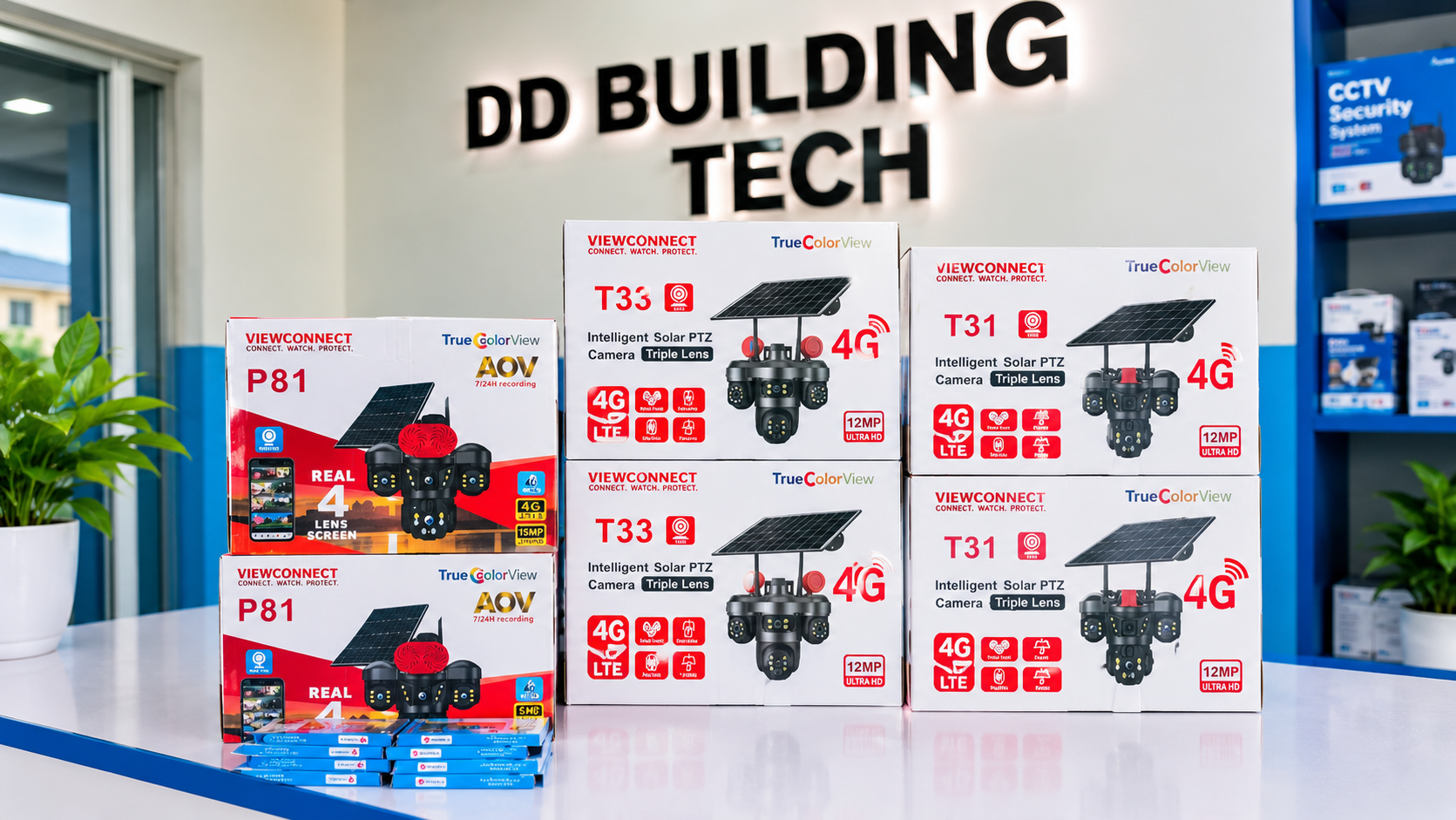
4G cameras use a SIM card and mobile network to transmit footage instead of depending on your home’s Wi-Fi.
This makes them useful for properties where reliable Wi-Fi isn’t available.
Best for:
- Remote homes
- Farms
- Construction sites
- Properties without reliable Wi-Fi
Why consider it:
- Doesn’t require Wi-Fi
- Can work in locations with mobile network coverage
- Supports remote monitoring
Keep in mind:
You need suitable network coverage and an active data plan.
Wi-Fi Cameras
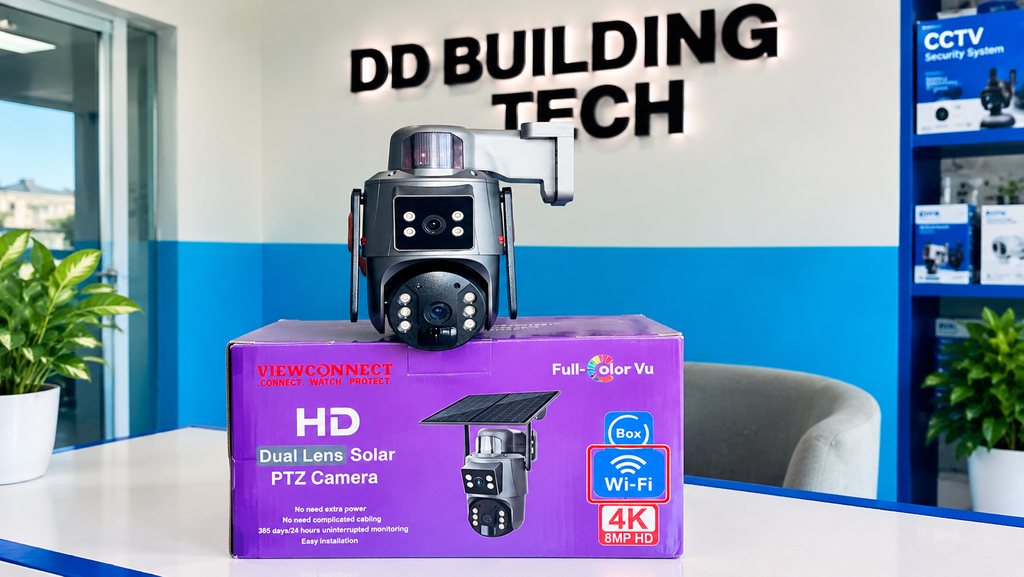
Wi-Fi cameras connect to your home’s wireless network and can allow you to view footage through a mobile app.
They can be convenient when you want a simpler installation without running traditional video cables throughout the property.
Best for:
- Apartments
- Small homes
- Indoor areas
- Properties with reliable WiFi connections
Why consider it:
- Easier installation
- Supports full WiFi option
- Remote viewing
Keep in mind:
Wi-Fi cameras depend on the quality of your wireless network connection.
Spy Cameras
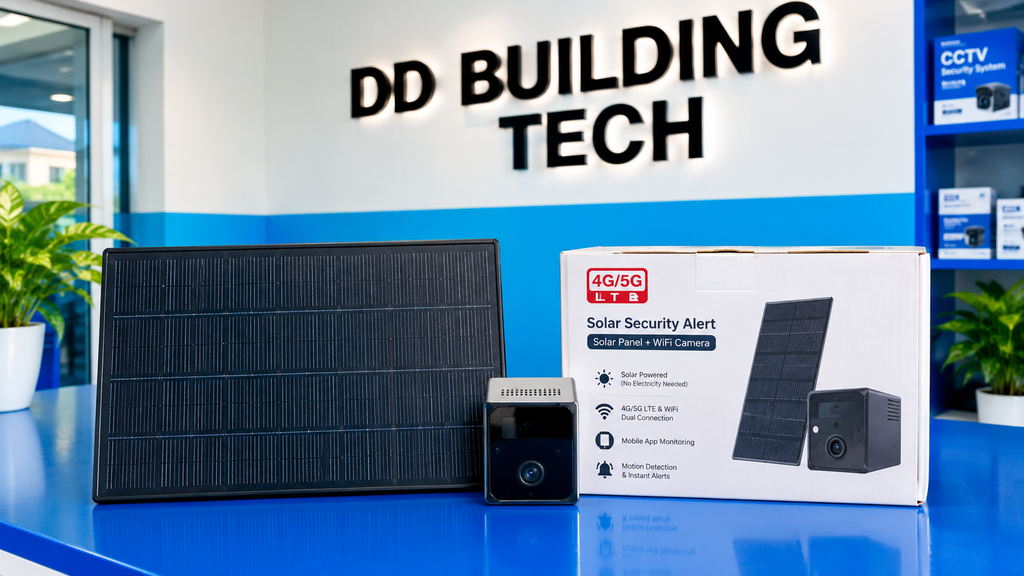
Spy or discreet cameras are designed to be less noticeable than conventional CCTV cameras.
They may be useful in situations where you need discreet monitoring.
However, privacy matters.
Before installing any discreet camera, make sure its use is appropriate and does not violate the privacy or rights of people in the property.
How Much Should You Spend on a CCTV System for Your Home?
Let’s talk about the part most homeowners think about before anything else: the cost.
You may have already seen CCTV cameras online or in stores ranging from relatively affordable options to systems that cost several times more.
And it can be tempting to assume that the more expensive the camera is, the better your home will be protected.
But that isn’t necessarily true.
Imagine spending a significant amount on a CCTV system with features you rarely use, while still leaving important areas of your property poorly covered.
That would be an expensive system, but not necessarily a good system.
On the other hand, choosing the cheapest option simply because it saves money today can become costly later if the footage is unclear at night, the camera struggles outdoors, storage is inadequate, or the system isn’t suitable for the conditions around your property.
This is why value for money matters more than price alone.
When choosing CCTV for your home in Nigeria, the goal shouldn’t be to find the cheapest camera or automatically go for the most expensive system.
The goal is to find a system that gives you the right level of coverage, reliability and protection for your particular home without paying for features you don’t actually need.
Another common mistake is to budget for the camera alone.
A proper CCTV installation can involve more than the cameras themselves.
Depending on the type of system you choose, you may need to account for a recorder, storage, cables, power accessories, a monitor or viewing device, installation and configuration.
At the End, Your Home Should Determine Your Budget
There is no single amount that every Nigerian homeowner should spend on CCTV.
A modest home with a few key areas to monitor may require a completely different setup from a large residential property in an estate or a standalone compound with several vulnerable points.
The right budget therefore starts with the property itself.
Consider:
- The size of your compound
- The number of entry points
- Indoor and outdoor coverage
- Night-time security
- Power availability
- Storage requirements
- Remote monitoring
These factors are more useful for determining your budget than simply asking, “How much does a CCTV camera cost in Nigeria?”
So, What Should You Actually Spend?
Rather than choosing a figure first and trying to force your home into it, start with your security needs and work backwards.
The important thing is to avoid two extremes:
Spending too little and compromising the protection you actually need.
Spending too much on features that don’t solve a real problem for your home.
The best CCTV investment is the one where your money goes towards the right coverage, the right features and the right level of reliability for your property.
And if you’re looking for a tailored cost for a CCTV system for your property, consult DD Building Technology Solutions. After assessing your property, we can recommend a system that fits your security needs and provide a tailored cost.
Common Mistakes to Avoid When Choosing a Home CCTV System
Choosing CCTV becomes easier when you know what not to do.
Choosing based on price alone
The cheapest camera isn’t always the best value, and the most expensive isn’t automatically the best.
Look at what the system actually provides for your property.
Buying too many cameras without planning coverage
More cameras don’t always mean better security.
Poor positioning can still leave blind spots.
Ignoring night-time performance
A camera that gives you clear footage during the day may not provide the same level of detail at night.
Forgetting about power
Especially in Nigeria, you need to think about what happens to your CCTV system when there is a power outage.
Ignoring storage
Having cameras record continuously is only useful if you have enough storage for the footage you actually need.
Installing cameras without considering their position
Even a good camera can perform poorly when positioned incorrectly.
The height, angle, direction and surrounding environment all matter.
Buying features you don’t need
A camera with more features isn’t necessarily a better choice.
Choose features that solve an actual security need around your home.
Which CCTV System Is Best for Your Home?
Now that you know what matters, here’s a simpler way to think about your options.
Small house
Consider: Dome, bullet or Wi-Fi cameras.
Why: They can provide practical coverage for key areas without requiring an unnecessarily complex system.
Large compound
Consider: A combination of fixed cameras and PTZ cameras.
Why: Fixed cameras can monitor important points while a PTZ can provide wider coverage of larger areas.
Unreliable electricity
Consider: Solar-powered cameras or a CCTV system with an appropriate backup power solution.
Why: Your cameras can remain operational even when regular electricity is unavailable.
Wide coverage needed
Consider: PTZ or multi-lens cameras, depending on the area.
Why: PTZ cameras can cover and zoom across large areas, while multi-lens cameras can provide different views from a single installation point.
Remote monitoring needed
Consider: An internet, Wi-Fi or 4G-enabled CCTV system.
Why: These options can allow you to view your property remotely through a compatible mobile app.
Final Thoughts: Choosing the Right CCTV for Your Home
The best CCTV camera for your home is the one that solves the security problems around your property.
Before you buy, think about where you need coverage, what happens at night, how the system will be powered, where your footage will be stored and whether you need to monitor your home remotely.
A properly planned CCTV system can give you more than cameras around your home.
It can give you better visibility, better control and greater peace of mind.
Frequently Asked Questions
What is the best CCTV camera for a home in Nigeria?
There is no single best camera for every home. The right choice depends on your property size, coverage requirements, power supply, location and need for remote monitoring.
How many CCTV cameras do I need for my house?
It depends on the size and layout of your property. Start by identifying your main entrances, perimeter areas, parking spaces and other vulnerable points that need monitoring.
Are solar CCTV cameras good for homes in Nigeria?
Yes. Solar cameras can be useful for homes where electricity is unreliable or where running power cables is difficult. Their performance depends on proper installation, sunlight exposure and battery capacity.
Can I monitor my CCTV cameras from my phone?
Yes, if your CCTV system supports remote monitoring and has the required internet or mobile network connection.
Is one PTZ camera enough to secure a large compound?
Not necessarily. A single PTZ camera can cover a wide area, but it cannot monitor every direction at the same time. A combination of PTZ and fixed cameras may provide more comprehensive coverage.
Should I choose a wired or wireless CCTV system?
It depends on your property. Wired systems can provide stable connections for permanent installations, while wireless options can be easier to install where running cables is difficult.
Need Help Choosing the Right CCTV System?
With years of CCTV installation experience across Enugu, Awka and other parts of Nigeria, we can assess your property, identify the areas that need coverage and recommend a CCTV system based on your actual security needs.
Not sure which CCTV setup is suitable for your home?
One wrong CCTV choice could cost you more than money. It could cost you your property.
Contact DD Building Technology Solutions Today for Expert Guidance