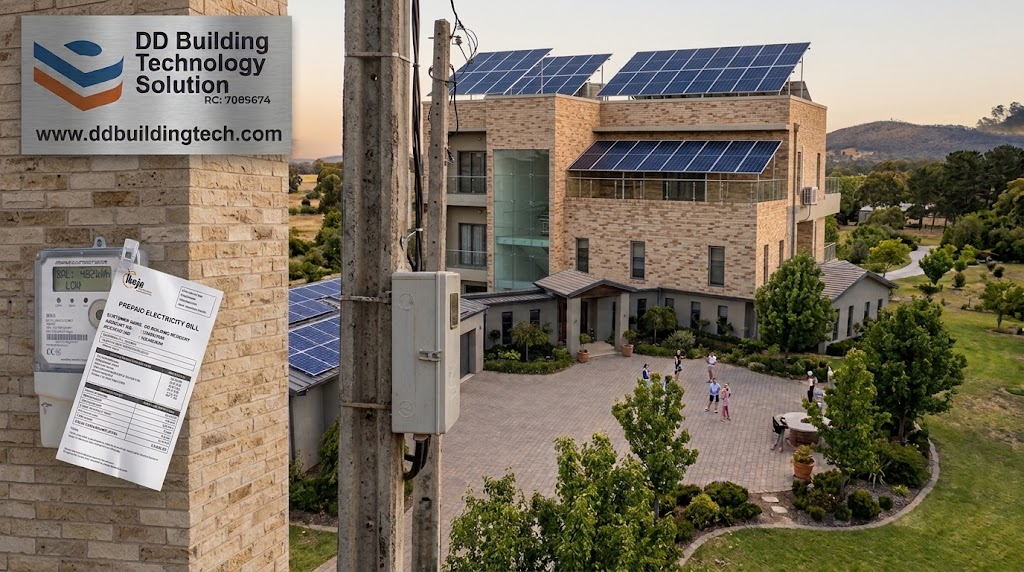
Many Nigerians are looking to reduce their electricity bills, especially if you’re on a Band A feeder. If you’ve topped up a prepaid meter in the last couple of years, you already know the feeling. You buy the same amount of electricity you always did, and the units on the screen come out far smaller than they used to. If you’re looking for ways to reduce your electricity bill in Nigeria under the Band A tariff, understanding what’s changed is the first step. Nothing is wrong with your meter. The price per unit changed, and it changed a lot.
This guide is for anyone who wants to reduce their electricity bill in Nigeria now that Band A tariffs are what they are. We’ll look at what actually changed, show what a typical bill looks like in naira at the current rates, walk through where the money goes inside a normal home, and then lay out the steps that save real money, in the order we’d recommend. Some cost nothing. One of them is solar, and we’ll be honest about where it pays back quickly and where it doesn’t.
The short version, if you’re searching for how to reduce electricity bills for Nigeria Band A tariff households face: check your supply hours first, then cut your cooling load, swap any old bulbs, and only then price solar. The rest of this guide explains each step with real naira figures.
What Actually Changed With Band A
In April 2024, the Nigerian Electricity Regulatory Commission announced that customers on Band A feeders would pay ₦225 per kilowatt-hour, up from roughly ₦66. People’s Gazette’s report on the announcement quotes the regulator’s vice chairman saying that 300 of the 800 feeders then classified as Band A were moved down to Band B because they weren’t delivering the required hours of supply, leaving fewer than 500.
That condition is the part people forget. Band A means a feeder supplies a minimum of 20 hours of electricity a day. The higher price is supposed to buy you more reliable supply. In practice, plenty of customers have felt they were paying Band A prices for something closer to Band B service.
Since then, the picture has become less uniform. DisCos have quoted slightly different Band A rates, and the Minister of Power said in early 2025 that any adjustment would not go above the existing Band A rate. More importantly for readers in our home market, state regulators now have a say. In Enugu, the state regulator cut the Band A tariff from ₦209 to ₦160 per kWh for MainPower customers from 1 August 2025, while freezing the other bands.
We’re writing this in October 2026, and tariff orders change. Treat the figures in this post as worked examples, and check your latest bill or your distribution company’s published order for the rate that applies to your meter. You can also find regulatory updates on the NERC website.
What a Band A Bill Looks Like in Naira
The easiest way to understand the impact is to put numbers on it. Here is the energy cost for three typical monthly consumption levels at ₦160 and ₦225 per kWh:
| Monthly use | Bill at ₦160/kWh | Bill at ₦225/kWh |
|---|---|---|
| 150 kWh (small flat, light use) | ₦24,000 | ₦33,750 |
| 300 kWh (average family home) | ₦48,000 | ₦67,500 |
| 500 kWh (home with ACs and a freezer) | ₦80,000 | ₦112,500 |
These figures cover the energy charge only. Your actual bill or token purchase may carry other charges, so use this table to understand the scale of the problem, not as an exact invoice.
A household using 500 kWh a month at ₦225 is spending ₦112,500 a month on energy alone. Cutting consumption by even a fifth saves more than ₦20,000 every month. That’s the opportunity.
Where the Money Actually Goes
Before you can cut a bill, you need to know what’s driving it. In most homes, a handful of appliances account for the bulk of the units. Here’s a rough monthly picture, calculated from typical nameplate wattages and realistic daily use. Your numbers will differ, so check the label on your own appliances.
| Appliance and use | Monthly units | Cost at ₦225 | Cost at ₦160 |
|---|---|---|---|
| 1HP air conditioner, 8 hours a day | 216 kWh | ₦48,600 | ₦34,560 |
| 3 ceiling fans, 10 hours a day | 68 kWh | ₦15,188 | ₦10,800 |
| Chest freezer, running all day | 58 kWh | ₦12,960 | ₦9,216 |
| Fridge, running all day | 43 kWh | ₦9,720 | ₦6,912 |
| Electric iron, 1 hour a day | 30 kWh | ₦6,750 | ₦4,800 |
| TV and decoder, 5 hours a day | 23 kWh | ₦5,062 | ₦3,600 |
| Water pump, 1 hour a day | 23 kWh | ₦5,062 | ₦3,600 |
| 10 LED bulbs, 6 hours a day | 18 kWh | ₦4,050 | ₦2,880 |
The picture is clear. One air conditioner, run for a working day’s worth of hours, costs more than the fridge, freezer, TV, pump, and lights put together. Cooling is the single biggest lever in most Nigerian homes, and anything that reduces it moves your bill far more than switching off a phone charger ever will.
Step 1: Check You’re Actually Getting the Band You Pay For
This costs nothing and can be worth a lot. If you’re charged Band A, your feeder is supposed to deliver at least 20 hours of supply a day. If you’re regularly getting 14 or 15, you may be in the wrong band.
Keep a simple log for a few weeks. Note when the power goes out and when it returns. If the pattern shows you getting well under 20 hours, raise it formally with your distribution company, in writing, with your log attached. In Enugu, that means MainPower. Enugu’s regulator has also said, in the tariff order reported by Techeconomy, that MainPower must publish daily supply records for each Band A feeder by 9 a.m. the next day, and that a Band A feeder underperforming for seven consecutive days will be downgraded to the level of supply actually recorded. If the complaint isn’t resolved, you can escalate to the regulator. We can’t promise an outcome, and every feeder is different, but regulators have already moved feeders down a band when supply fell short, so it’s a legitimate thing to ask about.
Step 2: Fix the Biggest Line Item First
Because cooling dominates, small changes there pay off most.
Set the thermostat sensibly. Air conditioners work harder the colder you ask them to go. Setting the temperature in the mid-twenties rather than the lowest setting cuts run time noticeably, without making a room uncomfortable once the humidity drops.
Close up the room. Gaps under doors, uncovered windows and open doors make an AC work against the whole house. Curtains on west-facing windows help more than people expect.
Consider an inverter-type air conditioner when you replace one. These vary compressor speed instead of switching on and off, and generally use less electricity for the same cooling. They cost more upfront, so the saving is a long-term one, but if you run the AC every day, it adds up.
Use fans to share the load. A fan uses a small fraction of what an AC does. On milder evenings, running fans instead of the AC for a few hours a week has a real effect over a month.
Step 3: Swap the Cheap Wins
The oldest advice is still good advice. Look at the lighting row in the table. Ten 60-watt incandescent bulbs running six hours a day use 108 kWh a month, or ₦24,300 at ₦225. Ten 10-watt LED bulbs doing the same job use 18 kWh, or ₦4,050. That single swap saves ₦20,250 a month at Band A rates, and LED bulbs cost a small fraction of that to buy. If you still have old bulbs anywhere, this is the cheapest saving in the whole post.
A few others worth doing in an afternoon: put the water heater and electric iron on a discipline of short, deliberate use; unplug chargers and idle appliances that draw standby power; keep the fridge and freezer away from the cooker and out of direct sun, and defrost the freezer so the compressor isn’t fighting ice; and clean AC filters, because a clogged filter makes the unit work harder.
Step 4: Use Power at the Right Time
Under a flat tariff like Band A, the time of day doesn’t change the price per unit. But it does change what you can do about it. If you plan to add solar, daytime is when your panels produce, so shifting heavy tasks like washing, ironing, and pumping water into daylight hours means those loads can run on free solar power instead of the grid. Even without solar, spreading big loads out avoids the demand spikes that trip inverters and strain your wiring.
Step 5: Use Solar to Take Units Off the Grid
This is where the largest, most permanent way to reduce electricity bill Nigeria Band A tariff exposure sits, and it’s worth being straight about how it works.
Every unit your solar system produces is a unit you don’t buy. A well-sized array has no fuel cost and almost no running cost. With a hybrid inverter set to prefer solar and battery over the grid, your home draws from the grid only when the sun and battery can’t cover it. We covered how that switching works in our guide to hybrid vs pure sine wave inverters.
Here’s a worked example using the 5KVA lithium system from our complete 5KVA solar system cost guide. The array is 3.6kW. As a rough planning figure, in the Nigerian sun that array produces somewhere around 12 kWh a day after losses, or about 360 kWh a month. That’s an estimate, not a guarantee, since clouds and season move it around.
Take a household using 400 kWh a month:
| At ₦225/kWh | At ₦160/kWh | |
|---|---|---|
| Bill with no solar | ₦90,000 | ₦64,000 |
| Units offset by solar (about 360 kWh) | ₦81,000 saved | ₦57,600 saved |
| Rough monthly saving | ₦81,000 | ₦57,600 |
Set against the roughly ₦4.25 million midpoint for the lithium build, a saving of ₦81,000 a month pays the system back in about 4.4 years from grid savings alone at ₦225, or about 6.1 years at ₦160. For the tubular-battery build at about ₦2.87 million, the same maths gives roughly 2.9 and 4.1 years, though that version carries battery replacement costs we cover in our lithium vs tubular comparison.
Now the honest part. If your only goal is trimming a grid bill, solar pays back more slowly than it does for someone who also runs a generator, because generator fuel is far more expensive per unit than even Band A power. If you run a generator for any stretch of the day, or lose sales or comfort to outages, the case for solar gets much stronger, and we look at that in detail in our solar vs generator cost comparison. Solar earns its keep fastest in homes and businesses that currently pay for power twice, once to the grid and once to a generator.
You Don’t Have to Start With a Big System
Plenty of households get most of the benefit by targeting daytime loads only. If your biggest consumers are a freezer, fans, a pump, and an AC used in the daytime, a smaller array and inverter can take those off the grid without paying for a big battery bank to cover the night.
For example, a mid-size hybrid inverter in the 3KVA class (the 3KVA Sako hybrid in our current list is ₦450,000) paired with four 600-watt panels (four at ₦155,000 each is ₦620,000) gives you a daytime-focused system for a little over a million naira before batteries and installation, subject to the inverter’s solar input rating. You can add battery capacity later, as the budget allows. It won’t cover your evenings, but it will cut the units you buy when the sun is up. You can see current stock on our Solar Panels, Inverters and Batteries pages, and our guide to solar panel pricing in Nigeria shows what each wattage costs.
The principle is the same as ever. Get the inverter and panel array sized correctly from the start, and treat the battery as the part you can grow over time.
Shortcuts That End Up Costing More
When the bill climbs, some people go looking for tricks. Tampering with a meter, bypassing it, or paying someone to “adjust” it is illegal, can attract fines, and tends to end with a disconnected supply and a larger bill than you started with. Cheap, unbranded gadgets sold as “electricity savers” that you plug into a socket don’t reduce the energy your appliances use either. If a device claims to cut your bill without changing what you run or how long you run it, treat the claim with suspicion.
The savings that last come from running less, running it more efficiently, or producing your own power. Everything in this guide falls into one of those three buckets, and none of it needs you to take a risk with your supply.
A Simple Order of Attack
If you want a plan to reduce electricity bill costs under Nigeria’s Band A tariff that you can start this week, here it is in order of effort versus payoff:
- Log your supply hours and challenge your band if you’re not getting what you pay for. Free.
- Replace any remaining incandescent bulbs with LEDs. A few thousand naira saves tens of thousands a year.
- Tame the air conditioner: sensible thermostat setting, sealed room, clean filters, fans on milder evenings.
- Audit your big appliances with the table above and see what’s actually driving your bill.
- Price a solar system sized to your real load, starting with daytime loads if the full build is out of reach.
Most people find that steps one to four trim a meaningful slice off the bill, and step five is what takes it down for good.
Frequently Asked Questions
What’s the fastest first step to reduce the electricity bill Nigeria Band A tariff customers are paying?
Check that your feeder actually delivers the 20 hours a day a Band A customer is paying for, then cut the biggest loads, which are usually air conditioning and old lighting. Both cost little or nothing and come before any solar purchase.
What is the Band A electricity tariff in Nigeria?
Band A is the tier for feeders that supply at least 20 hours of electricity a day. In April 2024, the regulator set it at ₦225 per kWh, up from about ₦66. Rates now vary by distribution company and state, and Enugu’s regulator has set Band A at ₦160 per kWh for MainPower customers, so check your latest bill for your actual rate.
Can I be moved to a lower band?
Feeders are classified by the hours of supply they actually deliver. If your feeder is regularly delivering fewer than 20 hours, you can raise it with your distribution company and, if unresolved, the regulator. Outcomes vary, but feeders have been reclassified before.
What uses the most electricity in a Nigerian home?
Usually the air conditioner, followed by fans, freezers and fridges, water pumps and irons. A single 1HP AC run for eight hours a day can use more than all your other appliances combined.
Will solar completely remove my electricity bill?
It can cut it dramatically, but eliminating it depends on system size, battery capacity, and your usage. Many households keep a grid connection as a backup for long cloudy spells and size solar to cover most of their consumption.
Is solar worth it if I don’t use a generator?
Yes, but the payback is longer because you’re offsetting grid power rather than much more expensive generator fuel. It’s still a fixed, predictable cost against a tariff that can change.
How much solar do I need to cut a ₦100,000 monthly bill?
It depends on your tariff and consumption, but at ₦225 per kWh, a ₦100,000 bill is roughly 444 kWh a month. A 3.6kW array produces roughly 360 kWh a month by our planning estimate, which would take a large share of that. We can size it properly against your actual meter readings.
Get a Solar Quote Sized to Your Actual Bill
Send us a photo of your last few token purchases or your monthly bill, plus a list of your big appliances, and we’ll show you what a solar system sized to your usage would cost and how long it would take to pay back.
We install in Enugu and Anambra, with nationwide delivery across Nigeria.